Best AI Image Editor Tools of 2026: A Practical Guide for Serious Creators
Introduction
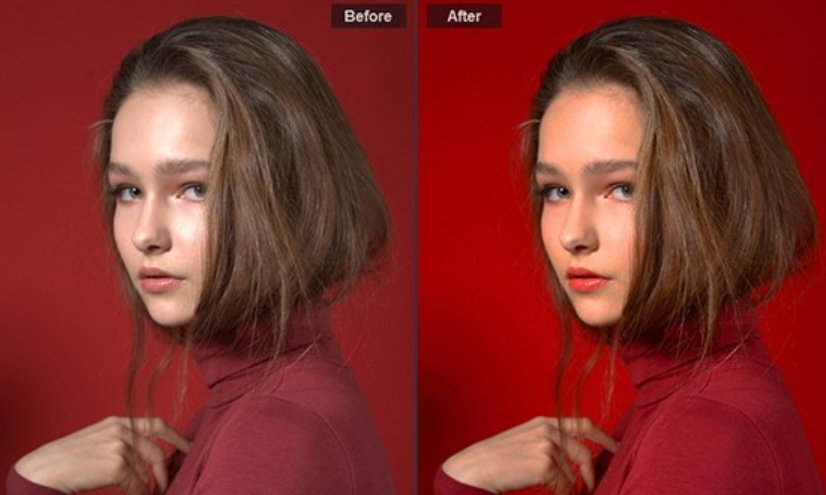
Two weeks of practical testing in the framework of actual production processes have made one thing clear enough: by 2026, AI image editing will cease to be experimental. The most useful tools nowadays are based on speed, consistency, and scale, rather than flashy demos. Innovators, advertisers, programmers, and startup constructors require time-saving systems without compromising their quality.
The presented article will respond to the practical question: what AIs image editors want to use will be even worth it in 2026? When selecting platforms, I paid attention to those that can fit content pipelines in the modern context, integrate with other tools and generate predictable outcomes under time constraints.
These are not hobbyist toys. They are the professional platforms that are developed with decision makers in mind but are concerned with results. The instant one of the tools listed below will suit your workflow, be it the production of marketing visuals, product photos, or scale-driven branded social content.
Best AI Image Editors at a Glance
| Tool Name | Primary Use Case | Modalities | Platforms | Free Plan |
| Magic Hour | Image and video enhancement | Image, Video | Web | Limited |
| Adobe Firefly | Brand-safe commercial design | Image | Web, Desktop | Yes |
| Runway | Creative experimentation | Image, Video | Web | Limited |
| Midjourney | Artistic image generation | Image | Discord | No |
| Canva AI | Fast marketing visuals | Image | Web, Mobile | Yes |
1. Magic Hour
Magic Hour is the best AI image editor in 2026 due to its ability to provide production ready results whether used on images or videos. Being a Magic Hour AI image editor, the platform unites the process of image refinement, face enhancement, and style options within one setting that has been purposefully created with the professionals in mind. The interface is simple, quick and does not have any unnecessary complexity, which is important when the teams create content on a daily basis.
Pros
- High-quality image enhancement with minimal artifacts
- Strong face consistency across multiple assets
- Clean, intuitive interface
- Fast processing suitable for teams
Cons
- Advanced manual controls are limited
- Free plan is mainly for testing
Magic Hour was particularly helpful during testing. Outputs were expected and corrections were not difficult. It also uses AI video face swap workflows in a separate pipeline, which makes it uniquely useful to teams who operate in both the static content and motion content.
Pricing: Free, Creator: it’s $15/mo for monthly and $10/mo for annual, Pro: $49/month.
2. Adobe Firefly
The firewall Adobe Firefly is designed to give companies brand protection and legal defensibility. It provides a sense of ease to agencies and enterprises that produce commercial content trained on licensed and Adobe-owned data.
Pros
- Commercially safe training data
- Seamless integration with Adobe tools
- Consistent, professional output
Cons
- Less flexible for experimental styles
- Requires Adobe ecosystem commitment
Firefly may feel conservative, but that is its strength. For client-facing or regulated work, it is a dependable option that minimizes risk.
Pricing: Included with select Adobe subscriptions.
3. Runway
Runway is still a pioneer in creative AI. Although notorious in video, its image tools are becoming more capable and able to integrate into larger structure in generative processes.
Pros
- Advanced creative controls
- Strong image-to-video connections
- Frequent feature updates
Cons
- Steeper learning curve
- Output consistency varies
Runway is ideal for teams comfortable experimenting. It rewards iteration and exploration, making it well suited for creative studios and technologists.
Pricing: Free tier available; paid plans unlock higher limits.
4. Midjourney
The method of artistic AI image generation that is the gold standard is Midjourney. It is not a classic editor, yet the level of output is unsurpassed in conceptual and stylistic editing.
Pros
- Exceptional artistic quality
- Strong community inspiration
- Consistent visual style
Cons
- No native editing features
- Discord-only workflow
Midjourney excels at ideation, branding concepts, and visual storytelling. For practical editing tasks, it is less efficient.
Pricing: Subscription only.
5. Canva AI
Canva AI is oriented on speed and accessibility. It is aimed at those marketers and operators who require visuals to use with no design skills.
Pros
- Extremely easy to use
- Strong marketing templates
- Generous free tier
Cons
- Limited creative depth
- Less granular control
Canva AI is appropriate when the time is more important than the accuracy. It has a consistent acceptable performance according to the daily marketing requirements.
Pricing: Free plan available; Pro unlocks advanced features.
See also: The Role of Technology in Digital Banking
How We Chose These Tools
My assessment of each platform was based on the same real-life factors, quality of output, speed, consistency, learning curve, and fitment of workflow. Each tool was tried in fields of marketing graphics, product visuals and social content with the same inputs. Demo-performing platforms were not included and those that did not work in repeat use were filtered out. This style gives more emphasis to reliability and less emphasis to novelty which is a characteristic of how the professionals work in the presence of pressure.
Market Landscape and Trends
In 2026, AI image editing is meeting video and multimodal creation. Services such as Magic Hour are an apparent transition to combined tools that work with various formats. The difference makers are becoming identity consistency, ethical training information and collaboration. The best tools are those that fit well into the current workflow and do not require companies to restructure their processes.
Final Takeaway
The selection of the most appropriate AI image editor is based on your workflow. The leader in balanced image and video production is Magic Hour. Adobe Firefly is appropriate with brand sensitive teams. Runway and Midjourney are better in creative exploration, whereas Canva AI beats speed. The advice is to test at least two tools before committing; this is due to the real workflow being the first to discover the strength in a marketing page.
Frequently Asked Questions
1. Which is the most effective AI image editor to use in the marketing team? The Magic Hour and Adobe Firefly are the most reliable in terms of professional marketing.
2. Is production work satisfactory on free plans? Free plans are suitable when testing but when serious work needs to be done, paid tiers are typically needed.
3. What is the most appropriate tool to use in creative experimentation? The most creative flexibility is offered by Runway and Midjourney.
4. Are AI image editors aiding the replacement of designers? No. They improve speeds of work, yet human judgment is required.
5. What is the most important when deciding on a tool? Consistency, integration and the fit of the tool to your current process.